San Francisco, California, 7-11 December 2020
Submission deadline: 29 July, 2020, 23:59 EDT
Conveners:
Val Finlayson, Bradley Peters, Shichun Huang & Andrea Giuliani |

2020 Annual GSA Meeting Connects Online
26-30 October 2020
Geophysics & Geodynamics Sessions:
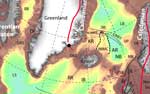
T17: Evolution, Structure and Landscapes of the North Atlantic-Arctic Realm
T12: Assembling Laurentia: Neoproterozoic to Cambrian Rifting and Continental Margin Evolution during Breakup of Rodinia and Pannotia
T13: Some like It HOT: The Role of Late Extensional Tectonics in Collisional Orogens, with Special Emphasis on the Grenville Orogen
T26: Structural Geology and Tectonics Division 40 th Anniversary Symposium: Drivers of Orogenesis
–Donna Jurdy, Carol Stein, Ting Chen, & Ben Drenth
JpGU 2020 Special Session
Do Plumes Exist?
Conveners: Hidehisa Mashima, Gillian R. Foulger & Dapeng Zhao |
|
|
10-12 January, Copenhagen, Denmark
Topics & Sessions included:
S2.1 Geodynamic & geological evolution of the Arctic
S2.3 Dynamics of the mantle-lithosphere system
S12.1. Geophysics open session |
 |
22-25 October, 2017, Seattle, USA
Abstract deadline: 1st August, 2017 |
Session T240: Structure and Evolution of the North Atlantic-Arctic Realm
Conveners
Christian Schiffer, Gillian R. Foulger, Randell Stephenson, Fiona Darbyshire & Hans Thybo
Goals
The discussion and revision of the structure and geological-geodynamic evolution of the North Atlantic–Arctic realm. Contributions from all relevant disciplines are requested, especially reports of multidisciplinary approaches.
Invited speakers
Andrew Schaeffer (University of Ottawa)
Victoria Pease (Stockholm University)
Laurent Gernigon (Geological Survey of Norway, NGU)
Planned
Special Issue in Journal of Geodynamics |
 |
|
May 20-25, 2017, Chiba-city, 261-0023, Japan
Session S-IT21: Do Plumes Exist?
Conveners: Hidehisa Mashima, Gillian R. Foulger, Dapeng Zhao |
AGU 2014 Special Session
Theory of Earth
Conveners:
D.L. Anderson, J. Bass, G.R. Foulger & J.H. Natland
Goldschmidt Conference, Florence, Italy
August 25-30
Union Session, Theme 01e
Causes of Phanerozoic Mass Extinctions: Impacts vs. Large igneous Provinces vs. Others?
Conveners: F. Jourdan, A. Marzoli, S. Cirilli
2D Symposium and School for Young Scientists, Irkutsk, Russia
August 22-23, 2013
Continental Rifting, Accompanying Processes
Conveners: Rasskazov, S.V., Nikishin A.M, Primina S.P.
South Pacific Slab Conference
Summer, 2014
Suva, Fiji
Gordon Research Conference and Seminar "Interior of the Earth" 2013
AGU Fall Meeting 2012 Special Sessions
T26: Interdisciplinary Perspectives on the Origin of Intraplate Volcanism and Large Igneous Provinces
Ridges and Hotspots around the Mascarene Island
3-7 September, 2012
Mauritius Island
Goldschmidt, Montréal, Canada, June 24-29, 2012
4g. Geochronology and geochemistry of large igneous
provinces
34th
International Geological Congress, Brisbane, Australia,
5-10 August, 2012
21.6 Large
Igneous Provinces (LIPs) and their impact on the
lithosphere, atmosphere and biosphere.
EGU,
Vienna, 22-27 April, 2012
GD2.4/GMPV6.17/SM2.12 Oceanic hotspot origin and dynamics
GD3.6/GMPV6.11/SM4.1/TS1.3 The lithosphere-asthenosphere
boundary (LAB) depth paradox
GAC-MAC,
St. John’s Newfoundland, Canada, May
27-29, 2012
The Large Igneous Province Record of North America
Through Time

Items
of special interest

21.6 Large Igneous
Provinces (LIPs) and their impact on
the lithosphere, atmosphere and biosphere.
Scott
BRYAN scott.bryan@qut.edu.au (Australia),
Steve SELF (UK) and Ingrid UKSTINS-PEATE
(USA)
Large igneous provinces
(LIPs) represent episodic, catastrophic
igneous events throughout Earth history.
They are distinguished by high intensity
bursts of principally mantle-derived magma
to the crust and surface over geologically
short timescales. LIP volcanism had a major
impact on the lithosphere, atmosphere and
biosphere, and consequently has been implicated
as a driving factor in environmental change
based on the temporal relationship with
several mass extinction events through
the Phanerozoic. Not only can individual
eruptions pose a significant hazard through
atmospheric loading of volcanic aerosols,
but elevated eruption frequency and the
potential for synchronous mafic ± silicic
large-magnitude (>M8)
eruptions mean that environmental change
may be exacerbated by the cumulative effects
of multiple eruptions, both direct and
indirect. Over the last 10 years, proposed
mechanisms for environmental change include
volcanic CO2 or S emissions, gas emissions
from clathrate or hydrocarbon disturbance,
and Fe fertilisation of oceans from ash
loading. This Symposium seeks cross-disciplinary
contributions from the Earth, atmospheric,
climate, and biological sciences that are
investigating the lithospheric to atmospheric
impact of LIPs. Contributions focusing
on assessing the integrated impact and
the rates and mechanisms of Earth system
response to LIP magmatism are encouraged.
The
fourth circular is due out in January and
abstract deadline is 17 February 2012.
Goldschmidt,
Montréal, Canada, June 24-29,
2012
4g. Geochronology and geochemistry of
large igneous provinces
(co-hosted by Themes 4 and 5)
Co-convenors:
Paul Sylvester (Memorial University, Newfoundland,
Canada) - psylvester@mun.ca
Richard Ernst (Ernst Geosciences) - richard.ernst@ernstgeosciences.com
Mike Hamilton (University of Toronto) - mahamiltongeology.utoronto.ca
Wouter Bleeker (Geological Survey of Canada-Ottawa)
- Wouter.Bleeker@NRCan-RNCan.gc.ca
Large igneous provinces (LIPs) are the
result of large volume magmatic events
emplaced over short time scales, found
through all of the geologic record. Recent
advances in U-Pb geochronology of baddeleyite
by TIMS, SIMS and LA-ICPMS have allowed
many more mafic LIP events to be dated
precisely. The new ages are used for correlations
between LIP units on now dispersed terrane
fragments, providing constraints on reconstructions
of supercontinents. Precise age data also
allow geochemical comparisons between different
LIP events, leading to a better understanding
of variations in their mantle sources and
melting processes. This session aims to
highlight the analytical developments of
U-Pb geochronology of baddeleyite and the
application of high-precision age data
for LIPs to paleo-continental reconstructions,
mantle geochemistry, mantle dynamics and
plumes, the intrusive and extrusive architecture
of LIPs, global environmental catastrophes
and biological mass extinctions, and the
genesis and distribution of ore deposits
and hydrocarbons within LIP systems.
GAC-MAC,
St. John’s Newfoundland, Canada,
May 27-29, 2012
The Large Igneous Province Record of North
America Through Time
Richard Ernst, (Ernst Geosciences,
Richard.Ernst@ErnstGeosciences.com), Mike
Hamilton (Department of Geology, University
of Toronto,
mahamilton@geology.utoronto.ca), Wouter
Bleeker (GSC, Ottawa,
Wouter.Bleeker@NRCan-RNCan.gc.ca),
and Paul Sylvester, ( Memorial
University, psylvester@mun.ca)
This session will focus on large igneous
provinces (LIPs) in North America, through
all of geological time, also in adjacent
ocean basins (e.g. Iceland, the Arctic
basin), and in formerly attached continental
blocks (e.g. Europe, NW Africa, Siberia,
Australia? etc.). Contributions on all
aspects of LIP magmatism are welcome: mantle
dynamics and plumes, the intrusive and
extrusive architecture of LIPs, their interaction
with sedimentary basins and hydrocarbons,
the broader Earth system, geochemistry,
geochronology and paleomagnetism, paleogeographic
reconstructions, and ore deposits.
Gondwana
14
September 25-30, 2011
Buzios, Brazil
Session 2:
Mantle
plumes and Gondwana break-up
21st
Annual V.M. Goldschmidt Conference
August 14-19, 2011
Prague, Czech Republic
04i: Origin
of Large Igneous Provinces: linking geochemistry,
geochronology, geophysics, geodynamics
and climate modeling
04c: Plumes,
Mid-Ocean Ridges, and Plates: Examining
their Dynamics and Interactions with
Observations and Models
 |
AGU
Special Sessions, Fall 2009 |
DI01:
Linking Earth's Deep Interior to the
Surface Environment
DI03:
Seismic Discontinuities, Phase Transitions,
and Compositional Boundaries in the
Earth's Mantle
DI06:
Structure and Dynamics of the Earth's Upper
Mantle and Transition Zone: The Role
of Water
G11:
Plate Motion and Plate Boundaries
T12:
Lithosphere-Asthenosphere Interaction:
Top-Down or Bottom-Up?
T15:
The Role of Magmatism in Rifting Continental
Lithosphere and the Rift-Drift Transition
T18:
Heat Transfer from Pluton to Plate Scales
T22:
Evolution of the Caribbean Plate: Linking its Tectonic, Magmatic, Metamorphic
and Stratigraphic Records
T28:
Topography and Mantle Processes
U03:
Consequences and Fraction of Recycled Basalt in the Mantle
U08:
Mantle Heterogeneity: Bridging the Gap Between Observations and Dynamics
U14:
The Nature, Frequency, Size and Consequences of Instabilities of the Continental
Lithosphere
V02:
Oceanic Plateaus Through Time: Formation, Preservation and Environmental Impacts
V16:
Synthesizing Diverse Data Sets into Models of Hawaiian Plume and Island Evolution V21:
Mantle
Potential Temperature: A Very Hot Topic |