Roadmap | The website review process | Home
:: MECHANISMS ::  Ridge-transform intersections Impacts Plate tectonic processes Reheated slabs Gravitational instability EDGE
  Earth tessellation Rifting decompression meltingSlab breakoff PLATEHydration weakening Plumes Small-scale convection
:: LOCALITIES ::
Mantle heterogeneity
Zombie science
Olivine control temperatures
Recycling
Titanium
Tomography problems
Hell
Transition zone
Mantle warming
Plumes
Plume coffin
Self-organization
LIP classification
Osmium & tungsten
Lithospheric uplift
Lower crust recycling
Origin of OIB
Eclogite reservoirs
Norwegian volcanic margin
Volcanic margins
Silicic LIPs
Metasomatic OIB
What is a plume?
Komatiites
Neon & Argon
Thermal
Mantle temperature under LIPs
Ar-Ar dating
Pacific seamount ages
Hotspot table
Radiating volcanic migrations
Giant dikes
Cracks & stress
Plumes exist because...
Convection
Hotspot reference frame
Seismology
Noble gases
Pt-Os
Mantle reservoirs
General theory of plate tectonics


Localities : Africa | Antarctica | Atlantic | Central America | Eurasia | Iceland & Greenland | India | North America | Pacific | Planetary | South America

:: A glance at today's paper ::  
Brunelli, D., M. Seyler, Asthenospheric percolation of alkaline melts beneath the St. Paul region (Central Atlantic Ocean), Earth Planet. Sci. Lett., 289, 393-405, 2010.


Recent scholarly articles


Magazine articles


Foundations


Volcanic margins


Related links


The P^3 Book


Bibliographies & papers

:: Notice Board:

S. Harangi


EGU 2010:
Vienna, Austria, 02 – 07 May

Session TS5.1

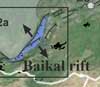
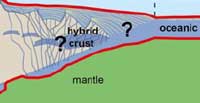
Continental rifting: influence of deformation processes and its interaction with sedimentary, serpentinisation and magmatic processes


Has a Hawaiian plume been found?

Discussion

Please contribute to on-line discussion by emailing the website manager


Wolfe et al., Mantle Shear-Wave Velocity Structure Beneath the Hawaiian Hot Spot, Science, 326, 1388 - 1390, 2009


Supporting on-line material


Virtual Workshop:

Understanding Deep Earth: Slabs, Drips, Plumes and More

part of the On the Cutting Edge program

February 17-19 & 24-26, 2010


Total number of visitors to date:

(Click me)


P^4 Book


Slide shows


Conferences

Cruises


LIPs


Planetary


Talk about plumes


Plume coffin

Any questions? Any Comments? Want to contribute? | About this site


:: Comments::

:: Comments? Questions?::
email the website manager


MantlePlumes.org mugs. To order, click here

19th Dec., 2009
Dear WM, I found an old paper entitled “The Method of multiple working hypotheses” by T.C. Chamberlin published in Journal of Geology, 5 (1897) 837–848. It has close bearing on current debates on the mantle plume hypothesis. The mantle plume hypothesis has often been linked to the origin of oceanic island basalts (OIB) and continental flood basalts (CFB), with potential implications for the composition of the lower mantle and even the core-mantle boundary layer. The debates centered on this issue closely mirror imperfections of our knowledge of mantle geochemistry. The issue of the origins and evolutionary mechanisms of oceanic and continental basaltic magmas is a vast subject. For anyone who wants to argue for/against the mantle plume hypothesis, it is necessary to clarify the positions of those said to hold divergent views.

The supposed divergence here includes not only acceptance/rejection of the evidence for the existence of mantle plumes (and the implications for the geochemical nature of their postulated ultradeep mantle sources), but also confidence/doubt in the applicability of the plume hypothesis to the origin of continental mafic rocks. The view that this position is somehow subjective may arise from confusion between objective reality (the existence of geochemical varieties of OIB and CFB ) and a human construct (a cherished but subjective model for the origin of observed features). The problem appears to be one of “academic affection” in the method of multiple working hypotheses (Chamberlin, 1897). On one hand, when a model has assumed the status of reality in the minds of its adherents, the whole system under discussion is viewed in the context of the model and thus there is great resistance to any attempt to challenge it.

Investigations predicated on this type of thinking can only lead to self-reinforcement of the initial ideas. Science, on the other hand, requires us to attempt to break out of such modes of thinking, by attempting to falsify models. In this regard, the mantle plume hypothesis has been well and truly falsified (Anderson D.L., 2007. New Theory of the Earth. Cambridge University Press, Cambridge, 384 pp), but this has little bearing on the reality of OIB and CFB on Earth. This is particularly so for OIB-like mafic rocks on continents, which may have important implications for the tectonic development of the continental lithosphere in which they occur (e.g., Zhang J.-J., Zheng Y.-F., Zhao Z.-F., 2009. Geochemical evidence for interaction between oceanic crust and lithospheric mantle in the origin of Cenozoic continental basalts in east-central China. Lithos, 110, 305-326).–Yong-Fei Zheng

::more::


:: HOME :: MECHANISMS :: LOCALITIES :: GENERIC ::
© MantlePlumes.org